polv's Chinese Learning Diary
千字文 - 3/2
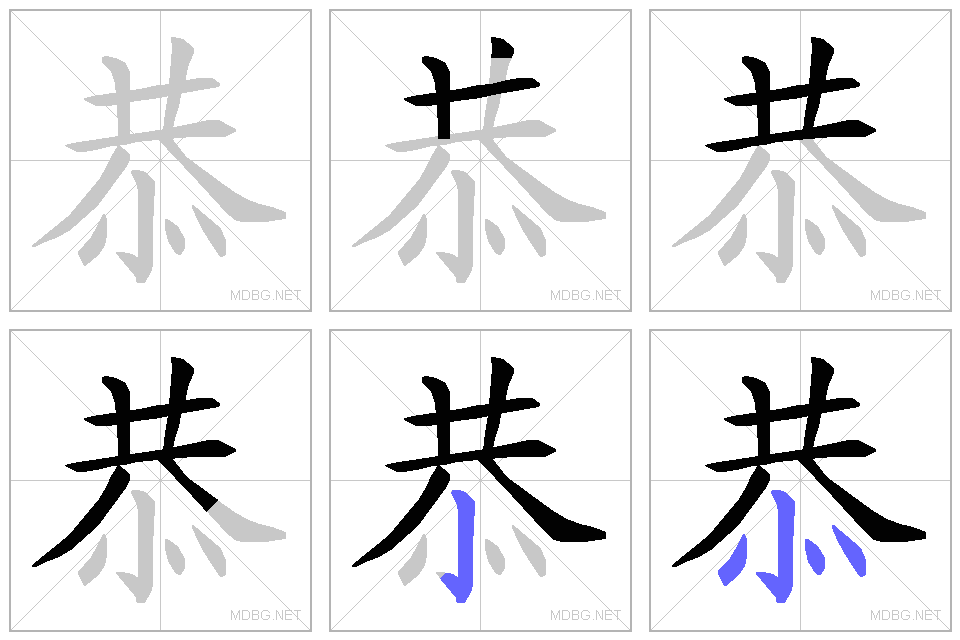
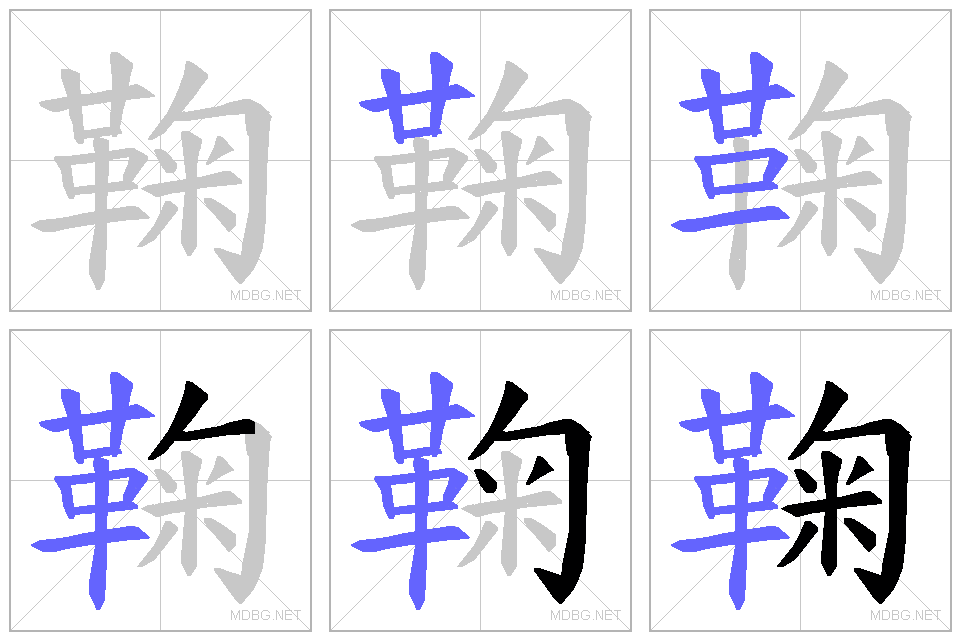
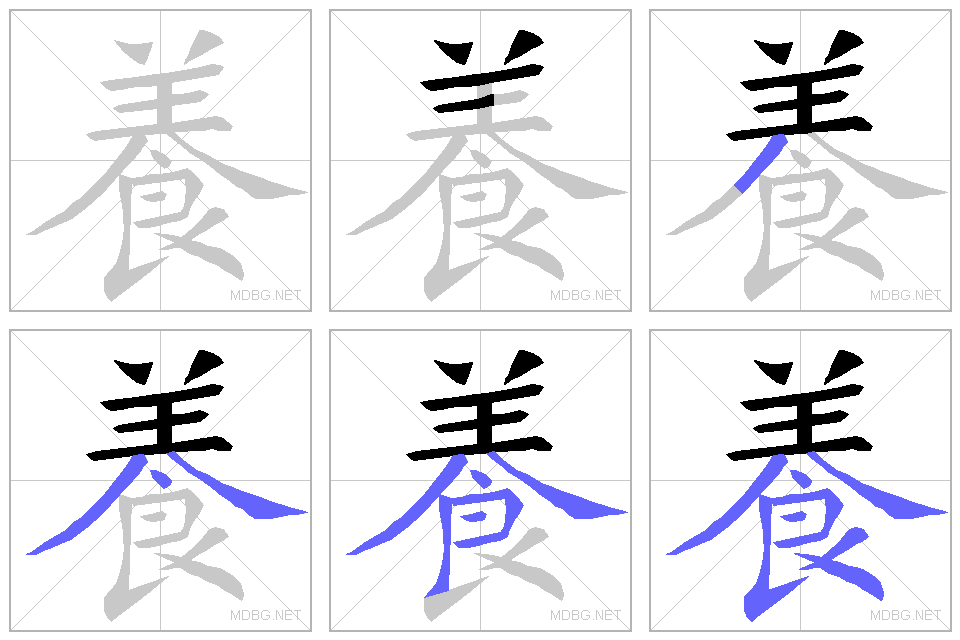
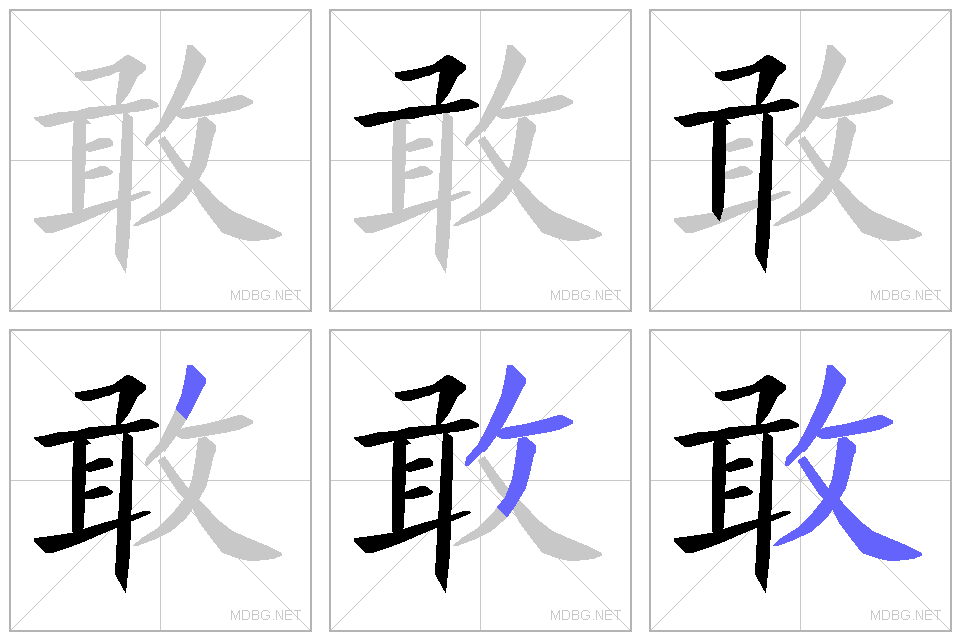
by Pacharapol Withayasakpunt恭惟鞠養,豈敢毀傷。

豈
| 恭喜 | gōngxǐ | congratulations / greetings |
| 恭 | gōng | respectful |
| 恭贺 (恭賀) | gōnghè | to congratulate respectfully / to express good wishes |
| 恭候 | gōnghòu | to look forward to sth / to wait respectfully |
| 恭喜发财 (恭喜發財) | gōngxǐfācái | May you have a prosperous New Year! (New Year's greeting) |
| 恭敬 | gōngjìng | deferential / respectful |
| 恭维 (恭維) | gōngwei | to praise / to speak highly of / compliment / praise |
| 恭祝 | gōngzhù | to congratulate respectfully / to wish good luck and success (esp. to a superior) / with best wishes (in writing) |
| 玩世不恭 | wánshìbùgōng | to trifle without respect (idiom); to despise worldly conventions / frivolous |
| 惟 | wéi | -ism / only |
| 惟有 | wéiyǒu | variant of 唯有 |
| 惟一 | wéiyī | only / sole / variant of 唯一 |
| 惟妙惟肖 | wéimiàowéixiào | to imitate to perfection / to be remarkably true to life |
| 惟恐 | wéikǒng | for fear that / lest / also written 唯恐 |
| 惟独 (惟獨) | wéidú | only / solely / this one alone |
| 伏惟 | fúwéi | to lie prostrate / to prostrate oneself (in veneration) |
| 鞠 | jū | to bring up / to rear / Taiwan pr. [ju2] |
| 鞠躬 | jūgōng | to bow / (literary) to bend down |
| 鞠躬尽瘁 (鞠躬盡瘁) | jūgōngjìncuì | to bend to a task and spare no effort (idiom); striving to the utmost |
| 鞠躬尽瘁,死而后已 (鞠躬盡瘁,死而後已) | jūgōngjìncuì, sǐ'érhòuyǐ | to bend to a task and spare no effort unto one's dying day (idiom); striving to the utmost one's whole life / with every breath in one's body, unto one's dying day |
| 蹴鞠 | cùjū | cuju, ancient Chinese football (soccer) |
| 鞠躬尽力 (鞠躬盡力) | jūgōngjìnlì | to bend to a task and spare no effort (idiom); striving to the utmost / same as 鞠躬盡瘁|鞠躬尽瘁 |
| 培养 (培養) | péiyǎng | to cultivate / to breed / to foster / to nurture / to educate / to groom (for a position) / education / fostering / culture (biology) |
| 营养 (營養) | yíngyǎng | nutrition / nourishment / CL: 種|种 |
| 保养 (保養) | bǎoyǎng | to take good care of (or conserve) one's health / to keep in good repair / to maintain / maintenance |
| 养生 (養生) | yǎngshēng | to maintain good health / to raise a child or animal / curing (of concrete etc) |
| 养 (養) | yǎng | to raise (animals) / to bring up (children) / to keep (pets) / to support / to give birth |
| 养殖 (養殖) | yǎngzhí | to cultivate / cultivation / to further / to encourage |
| 养护 (養護) | yǎnghù | to maintain / to conserve / curing (concrete etc) |
| 养老 (養老) | yǎnglǎo | to provide for the elderly (family members) / to enjoy a life in retirement |
| 养成 (養成) | yǎngchéng | to cultivate / to raise / to form (a habit) / to acquire |
| 素养 (素養) | sùyǎng | (personal) accomplishment / attainment in self-cultivation |
| 养老保险 (養老保險) | yǎnglǎobǎoxiǎn | old-age insurance |
| 岂不 (豈不) | qǐbù | how couldn't…? / wouldn't it…? |
| 岂 (豈) | kǎi | old variant of 愷|恺 / old variant of 凱|凯 |
| 岂 (豈) | qǐ | how? (emphatic question) |
| 岂止 (豈止) | qǐzhǐ | not only / far from / more than |
| 岂有此理 (豈有此理) | qǐyǒucǐlǐ | how can this be so? (idiom); preposterous / ridiculous / absurd |
| 岂非 (豈非) | qǐfēi | wouldn't it be … ? |
| 岂敢 (豈敢) | qǐgǎn | how could one dare? / I don't deserve such praise |
| 敢于 (敢於) | gǎnyú | to have the courage to do sth / to dare to / bold in |
| 勇敢 | yǒnggǎn | brave / courageous |
| 敢死队 (敢死隊) | gǎnsǐduì | suicide squad / kamikaze unit |
| 敢达 (敢達) | Gǎndá | Gundam, Japanese animation franchise |
| 果敢 | guǒgǎn | courageous / resolute and daring |
| 胆敢 (膽敢) | dǎngǎn | to dare (negative connotation) / to have the audacity to (do sth) |
| 敢为人先 (敢為人先) | gǎnwéirénxiān | to dare to be first / to pioneer (idiom) |
| 敢为 (敢為) | gǎnwéi | to dare to do |
| 石敢当 (石敢當) | shígǎndāng | stone tablet erected to ward off evil spirits |
| 竟敢 | jìnggǎn | to have the impertinence / to have the cheek to |
| 不敢当 (不敢當) | bùgǎndāng | lit. I dare not (accept the honor); fig. I don't deserve your praise / you flatter me |
| 不敢恭维 (不敢恭維) | bùgǎngōngwei | to be underwhelmed / to be less than impressed |
| 不敢苟同 | bùgǎngǒutóng | to beg to differ (idiom) |
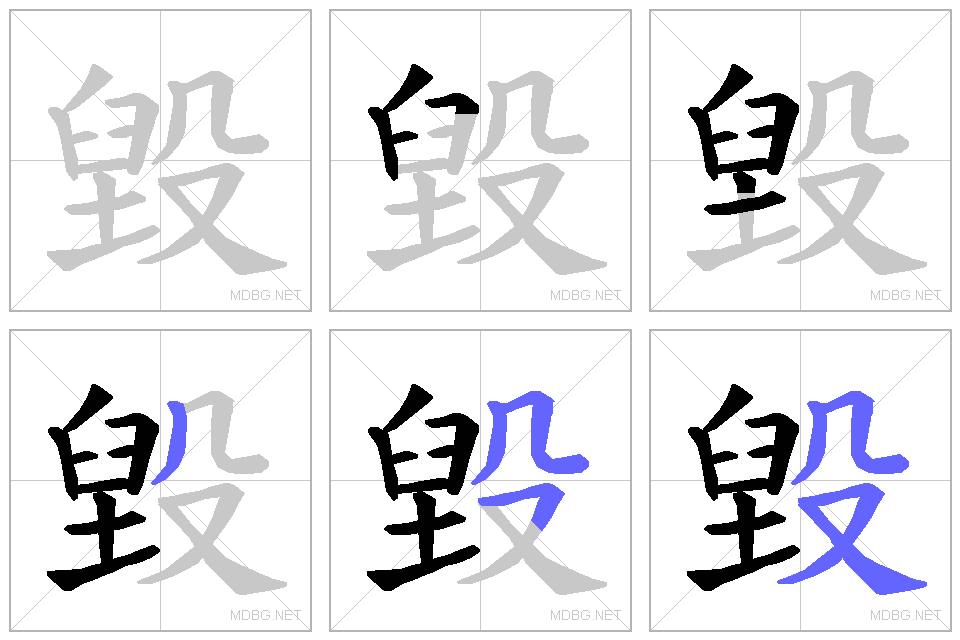
| 毁 (毀) | huǐ | to destroy / to damage / to ruin / to defame / to slander |
| 毁灭 (毀滅) | huǐmiè | to perish / to ruin / to destroy |
| 摧毁 (摧毀) | cuīhuǐ | to destroy / to wreck |
| 销毁 (銷毀) | xiāohuǐ | to destroy (by melting or burning) / to obliterate |
| 坠毁 (墜毀) | zhuìhuǐ | (of an airplane etc) to fall to the ground and crash |
| 毁掉 (毀掉) | huǐdiào | to destroy |
| 损毁 (損毀) | sǔnhuǐ | to cause damage to / to ruin / to destroy |
| 诋毁 (詆毀) | dǐhuǐ | to vilify / to slander / vilification |
| 毁损 (毀損) | huǐsǔn | impair, damage |
| 毁灭性 (毀滅性) | huǐmièxìng | destructive / devastating |
| 伤害 (傷害) | shānghài | to injure / to harm |
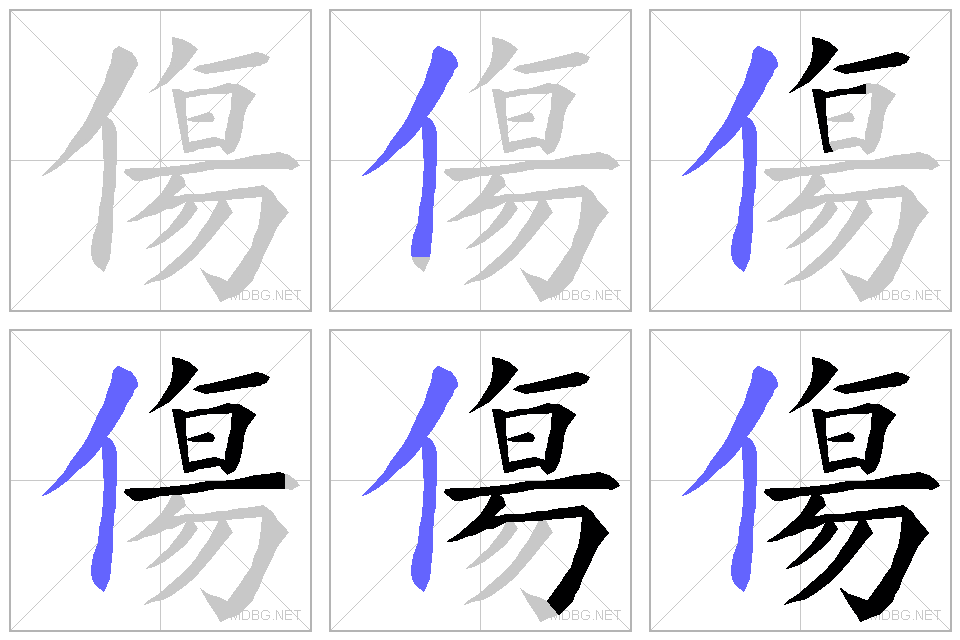
| 伤 (傷) | shāng | to injure / injury / wound |
| 伤感 (傷感) | shānggǎn | sad / emotional / sentimental / pathos |
| 悲伤 (悲傷) | bēishāng | sad / sorrowful |
| 受伤 (受傷) | shòushāng | to sustain injuries / wounded (in an accident etc) / harmed |
| 损伤 (損傷) | sǔnshāng | to harm / to damage / to injure / impairment / loss / disability |
| 忧伤 (憂傷) | yōushāng | distressed / laden with grief |
| 伤心 (傷心) | shāngxīn | to grieve / to be broken-hearted / to feel deeply hurt |
| 伤口 (傷口) | shāngkǒu | wound / cut |
| 伤亡 (傷亡) | shāngwáng | casualties / injuries and deaths |